BACK
Part 1 of a 4-Part Series on the History of DMRF Research Support
The History of the DMRF Medical and Scientific Advisory Council (MSAC)
At the heart of the Dystonia Medical Research Foundation’s mission is the ongoing pursuit of scientific advancements that lead to the discovery of the causes of dystonia, earlier diagnosis, more effective treatments, and ultimately a cure.
The DMRF Medical and Scientific Advisory Council (MSAC) provides guidance and advice on all the DMRF’s scientific efforts, including the planning of scientific workshops and reviewing all grant applications for dystonia-related research based on scientific merit at the Foundation’s Annual Meeting in February. MSAC’s review and scoring of applications serves as a guide in providing funding recommendations to the Board of Directors. With up to 30 members serving a four-year term (approximately one quarter of the members rotate on and off each year) MSAC represents a diversity of scientific fields related to dystonia research, such as clinical neurology, molecular biology, genetics, neurophysiology and neurochemistry.
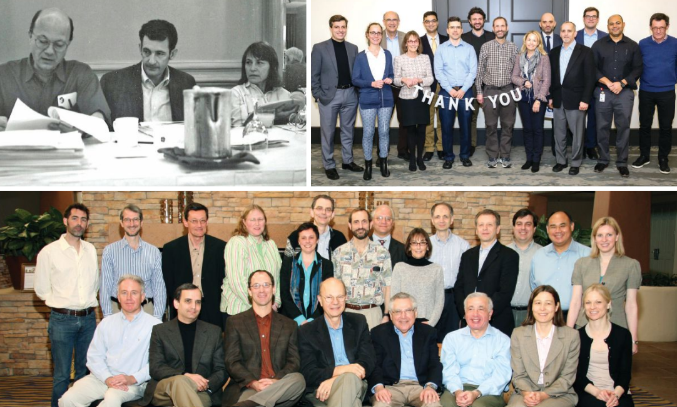
From the mid-1970s until the early 2000s, the DMRF’s Scientific Advisory Board (SAB) provided guidance and advice on all the DMRF’s scientific efforts, including the planning of scientific workshops and reviewing all grant applications for dystonia-related research. By 2006, the SAB was formally renamed the Medical and Scientific Advisory Council (MSAC).
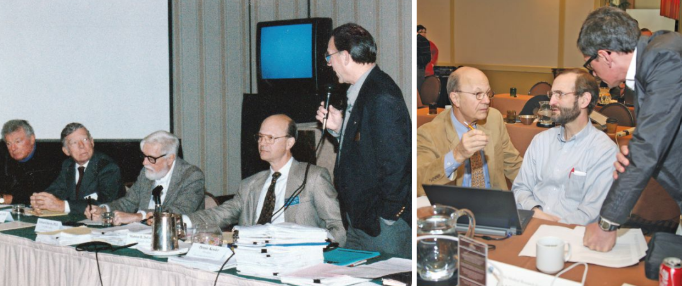
During the DMRF Annual Meetings, MSAC members discuss the merits of grant applications that have been submitted for funding.
MSAC adheres to a peer review process that closely models the current procedures of the National Institutes of Health (NIH).
Early Years of Scientific Research into Dystonia
One year after the founding of the DMRF, the first research grants from the Foundation were awarded in 1977 to Ivan Diamond, MD, PhD; David C. Barkley PhD, and John P. Blass, MD, PhD. At that time the DMRF had a 14-member Scientific Advisory Board (SAB) which was the precursor to the MSAC. “The early SAB functioned in much the same way as the current MSAC except that there was no dystonia research going on anywhere, so their job was to create interest in someone doing research,” Board member Dennis Kessler recalled. “The Foundation could fund all the dystonia research in the world since there was so little being done in the beginning. ”In 1982 the Scientific Advisory Board was formally structured with John J. Menkes, MD, as Scientific Director, Edward Harris, PhD as Scientific Liaison and Lois Rafael as Executive Director. Current DMRF Scientific Director, Joel S. Perlmutter, MD, has participated in DMRF scientific meetings dating back to the mid-1980s and recalled that the earliest advances in dystonia research were related to standardizing definitions of the different dystonic conditions, which led to better characterization of clinical syndromes for genetics research. Much of the early work on genetic mutations in animal models was also funded by the DMRF.
“In those early days there were just a few major centers supported by DMRF and the focus was collecting DNA for this research–which led to the discovery of the first dystonia gene named DYT1 or TOR1a, as it is now known, and its pathogenic mutation,” Dr. Perlmutter explained. “Another early advance was the neuroimaging of dystonia with several different approaches, including specific identification of selected regional abnormalities associated with dystonia and then network changes found.
“Perhaps more important than individual discoveries was the substantial support for early and new investigators in dystonia—this really led to an explosive growth in interest, research and subsequent clinical care.” By 2006, the SAB was formally renamed the Medical and Scientific Advisory Council (MSAC). DMRF Chief Scientific Advisor Jan Teller, PhD, noted that in addition to reviewing grants, the MSAC was tasked with affirming programmatic priorities, and providing direction for meeting the needs of dystonia healthcare professionals. Two Eras of Dystonia Research Richard Lewis, MD, DMRF Vice President of Science, noted that the scope of the work and the makeup of the SAB/MSAC evolved during the two eras of scientific research funded by the DMRF. Dr. Lewis describes the first era as before the discovery of the DYT1 gene in 1991 and the second era began after the gene discovery event.
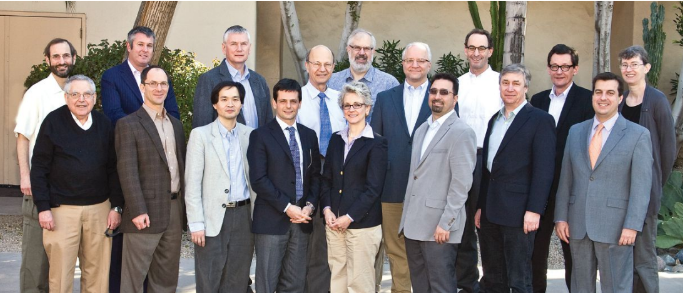
Members of the DMRF’s Medical and Scientific Advisory Council (MSAC) at the 2012 Annual Meeting. The young investigators who join MSAC are encouraged to continue studying dystonia throughout their career.
“In the first era there was expertise in epidemiology of dystonia. They spent time trying to figure out disease prevalence and geographic and population distribution. There were efforts to understand the relationship of the different types of dystonias and their connections,” Dr. Lewis explained. “Dr. Stanley Fahn was studying a large upstate New York family and his clinical population of Ashkenazi descent that led to the DYT1 discovery by Xandra Brakefield and Laurie Ozelius. Dr. Charles Markham was the Medical
Director of the DMRF at this time”. After the gene discovery in 1991 there was a change in the expertise required for the SAB.
“Grant requests came in that required genetic expertise,” said Dr. Lewis. “Many grant requests were focused on cellular models and on animal models that required understanding of genetics and how an animal might present with clinical phenotype. These new types of experts were located and offered positions on the SAB. ”Dr. Lewis added that the next evolution of the SAB—now renamed the MSAC—came about in the early 2000s when deep brain stimulation (DBS) for treatment of dystonia became a reality.
“This required the MSAC to have neurosurgical experts and the animal models proliferated as well,” said Dr. Lewis.
“Dr. Mahlon DeLong was the Scientific Director in this period and led the MSAC as a world-renowned leader in neurology and deep brain stimulation. He chose Council members by asking the MSAC to nominate experts in the fields we needed moving forward. He, along with Dr. Jan Teller, chose wisely to recruit new experts in the areas we needed, including more on genomics and proteomics and molecular biology and neurochemistry. ”
Focusing on the Future
In reviewing grant applications, MSAC adheres to a peer review process that closely models the current procedures of the National Institutes of Health (NIH). “Scientific rigor is important to be responsible stewards of the funds raised by the Board and all supporters of DMRF,” said Dr. Perlmutter. “However, in one way we differ from NIH reviews. At NIH reviews we score and rate grants based upon what is written without modification. At DMRF, we have the option to modify an application to obtain the best proposal to move dystonia research forward—that is our goal. This flexibility helps us reach that goal.” “We try to award the best research and at the same time acknowledge any good ideas that may lead to a breakthrough with limited resources,” Dr. Lewis noted.
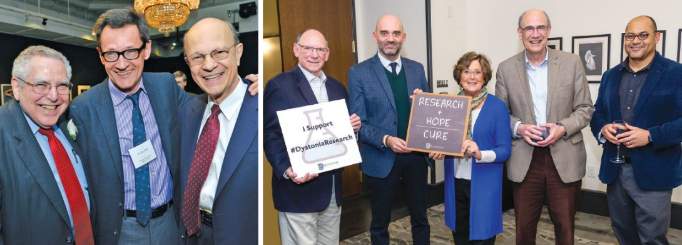
Richard Lewis, MD, DMRF Vice President of Science, noted that after the discovery of the DYT1 gene in 1991, DMRF grant applications required review by scientists with genetic expertise. After deep brain stimulation (DBS) for treatment of dystonia became a reality in the early 2000s, MSAC began to recruit experts in neurosurgery.
“This is done with adherence to the NIH routines for finding the wheat among the chaff.” Dr. Perlmutter added that the diversity of MSAC membership is critical because scientific advances in dystonia research can come from a variety of directions. “The broader the representation the more we learn,” he said. “If we only had the people that we know directly, then we would be far more limited. We do not know much more than what we know. That makes it key to having representation from broader perspectives and expertise. Also, this helps us capture others into the field.” Ultimately, the hope of a dystonia cure rests with young investigators who are willing to devote their careers to studying dystonia. “There is an effort to recruit young promising early career scientists to get them on board to increase their interest in dystonia in the hope of them maintaining their career in the field,” said Dr. Lewis.
Scientific advancements that were initially funded or enabled, facilitated and promoted by the DMRF
• First ever International Symposium on Dystonia held in New York City (1975)
• Discovery of botulinum toxin as a treatment for dystonia (early 1980s)
• The first classifications of dystonias (1985)
• Discovery of Artane as a treatment for dystonia (mid-1980s)
• Creation of the Dystonia Brain Bank
• Discovery of the DYT1 gene (1991)
• The first dystonia-free baby born via In Vitro Fertilization (IVF) following Preimplantation Genetic Diagnosis (PGD) (2003)
• Application of deep brain stimulation (DBS) as a treatment for dystonia
• Discovery of levodopa as a treatment for dopa-responsive dystonia
• Transcranial magnetic stimulation (TMS)
• Understanding of the pore structure and cellular inclusions in the nuclear membrane in DYT1 dystonia
• Importance of the tractography (non-invasive imaging) and brain connections and the possible role of the cerebellum in dystonia
Shared with permission from DMRF Dystonia Dialogue Summer 2025 Vol 48. No 3